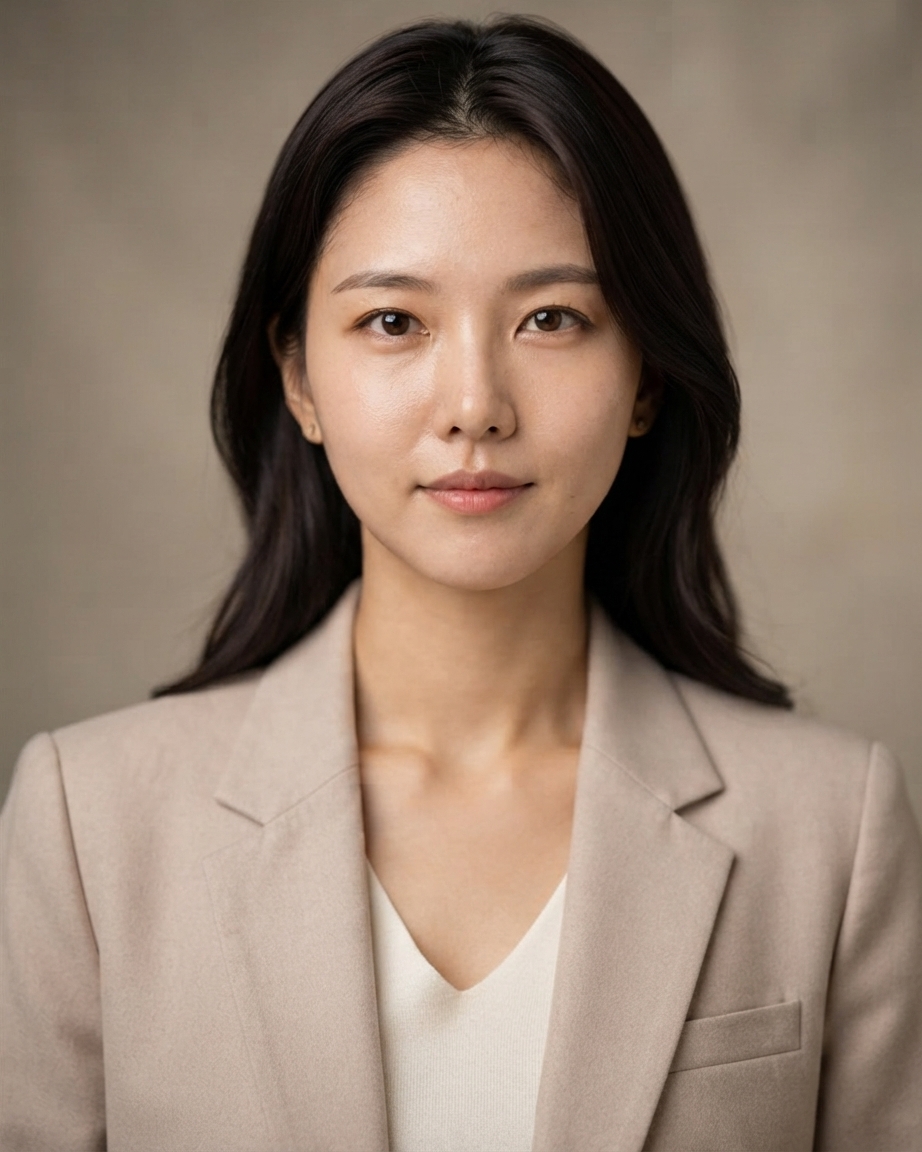
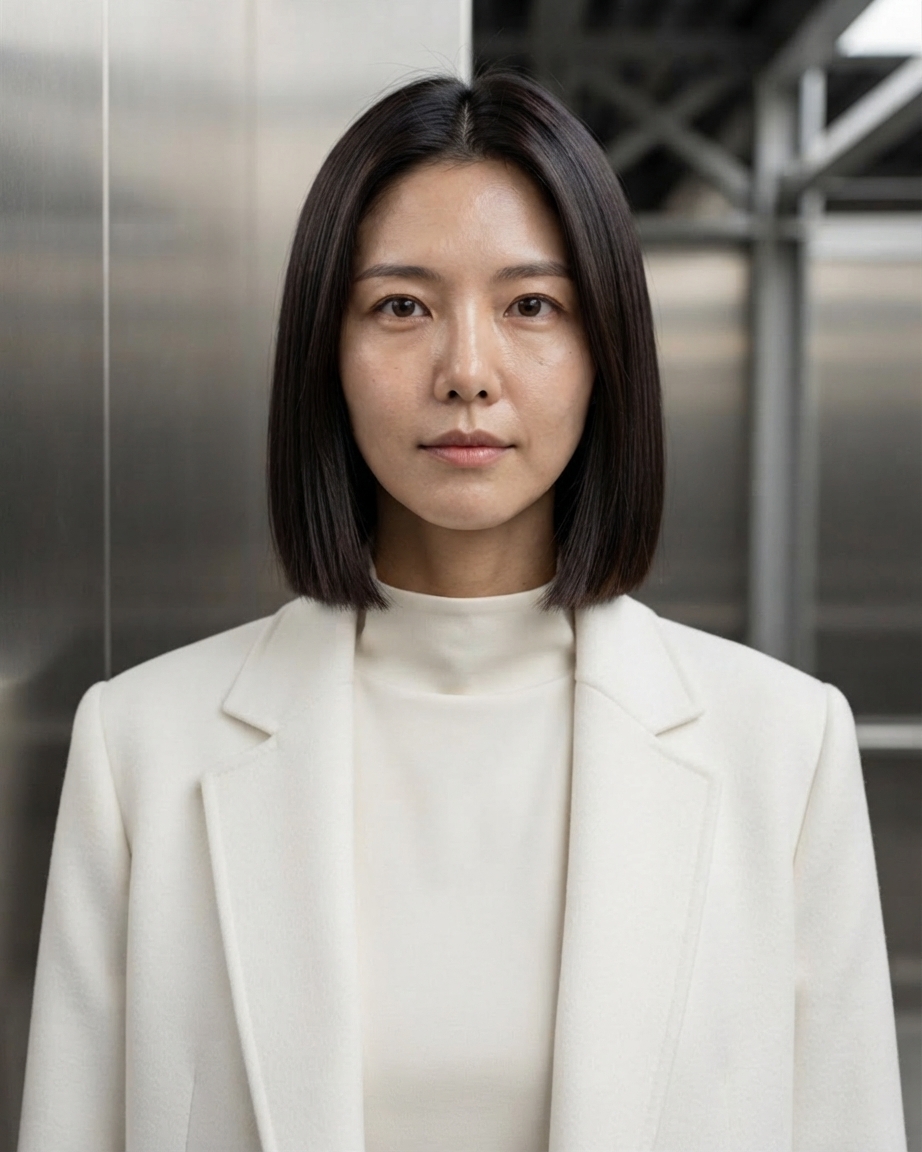
Style tools usually hand you a grid of thumbnails and let you choose. StylePick does the opposite: it takes one photo, works out what is already true about your face, hair and colouring, and comes back with exactly two proposals — one that confirms, one that argues.
Free preview available · Paid plans not yet on sale
Input — one photoDirection ADirection B
Illustrative examples generated for this page. Not real customer results, and not photographs of a real person.
The A/B system
A is the floor. B is the question.
The two directions are not “good” and “better”. They answer different questions, and you need both answers for either one to mean anything.
A — your best today
What you look like when nothing about your life has changed and the photograph is simply done properly. Same hair, wardrobe inside your current register, corrected distance and light. If A already looks unfamiliar to you, the problem was never your style — it was the camera.
B — the you you didn’t know
What you look like if the styling decisions are made again from scratch. Identity kept; hair, wardrobe, pose, framing and light all reopened. B is where the surprise lives, and it is the half people did not know how to ask for.
What a direction is made of
Six variables, decided together rather than one at a time. Change one in isolation and you get an inconsistent photo; change them as a set and you get a look.
Hair
Length, shape and how it falls. The variable with the longest real-world lead time, which is exactly why it is worth previewing rather than discovering in a chair.
Wardrobe
Garment, register and fabric weight. In a portrait, a collar is doing more compositional work than most people credit — it draws the line the eye follows to your face.
Palette
What the colours are doing against your skin and hair. A direction usually turns on one or two colour decisions, not a whole colour theory.
Light
Direction, hardness and temperature. Same face, same clothes, key light moved forty degrees, and it is a different photograph with a different mood.
Framing
Where the camera sits and how much of you is in the frame. Every result is composed as a 4:5 portrait, which is a real constraint rather than a crop applied afterwards.
Pose
Angle of the shoulders, tilt of the head, where the gaze goes. The cheapest variable to change in real life and the one people are least aware of.
What you get
Free
1 photo of direction A
No card required
One upload, no questions asked
4:5 portrait
StylePick Entry
One-time. No subscription, no credits.
3 final photos — 2 of direction A, 1 of direction B
Your personal style analysis
A change plan you can act on
High-resolution download
4:5 portrait
Three photos per direction rather than one, because a single frame can flatter a direction that does not hold up. Three is enough to see whether it survives a change of pose.
How the system works, in answers
What is a 'direction', exactly?
A direction is a set of decisions that hold together: hair, wardrobe, colour palette, light, framing and pose, chosen so that they belong in the same photograph. It is not a filter and not a preset — a filter applies the same maths to every photo, while a direction is a proposal about one specific face and cannot be transplanted to another one.
Why two directions instead of a menu of styles?
Because a menu makes you the art director, and most people did not come here to be one. Two directions is the smallest number that still contains a comparison: A tells you what is already working in your photo, and B tells you what you are not using. A longer list would mostly be filler, and you would pick the safest item on it anyway.
Why is there no questionnaire before the upload?
Questions constrain the answer to what you can already name. If you are asked to pick a style, you pick a style you have heard of, which guarantees you never see the direction you have not tried. One photo, no questions asked, keeps the proposal open — the photo already contains your bone structure, colouring, hair and current register, which is most of what a direction needs.
What is not allowed to change?
You. Identity is preserved in both directions — direction B changes hair, wardrobe, pose, framing and light, but the person in the frame remains the person who uploaded the photo. Everything StylePick moves is something you could move yourself with time, money and a mirror.
What if direction B is simply wrong for me?
Then keep direction A. It is the conservative reading of the photo you supplied rather than an interpretation of it, so it stays usable on its own; direction B is a proposal you are free to set aside.
How is this different from a photo editing app?
An editing app changes pixels you point at. StylePick decides what the photograph should have been and rebuilds it — different clothes rather than a recoloured shirt, a different light source rather than a brightness slider, a different distance to the lens rather than a crop. That is also why the output is a fixed 4:5 portrait: it is a photograph being staged, not an image being adjusted.
See both directions from one photo
The first direction A photo is free and takes no card. Paid plans are not on sale yet.